Pope Leo has reaffirmed that the Holy See does not approve the blessing of same sex couples, in remarks delivered to journalists on the return flight to Rome on April 23 following his recent apostolic journey to Africa.
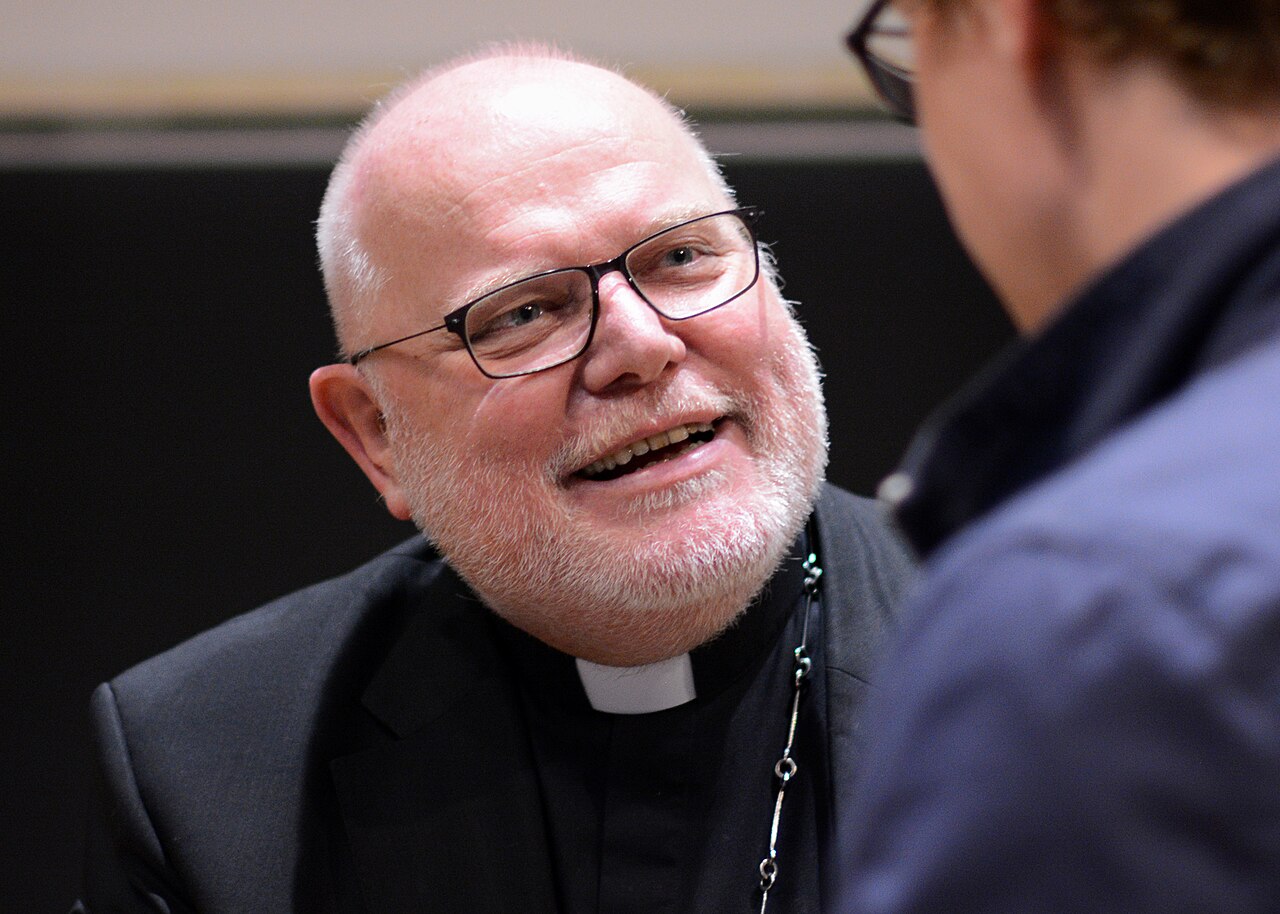
The Pope addressed the issue directly when asked about the divergence with developments in Germany after Cardinal Reinhard Marx confirmed new pastoral provisions permitting such blessings in his archdiocese.
He cautioned against reducing ecclesial doctrinal questions to a single moral issue, stating: “First of all, I think it’s very important to understand that the unity or division of the Church should not revolve around sexual matters.” He added that “there are much greater, more important issues, such as justice, equality, freedom of men and women, freedom of religion”.
Turning to the specific question, the Pope said: “The Holy See has made it clear that we do not agree with the formalised blessing of couples, in this case, homosexual couples … or couples in irregular situations, beyond what was specifically … allowed for by Pope Francis in saying all people receive blessings.”
His Holiness emphasised that blessings given at the end of Mass or major liturgical celebrations are “for all people”, adding that Pope Francis’s phrase “Tutti, tutti, tutti” reflects that universal invitation. He warned that “to go beyond that today … can cause more disunity than unity”.
The intervention follows confirmation earlier in the week, reported by AdVaticanum, that the Archdiocese of Munich and Freising will implement the guidelines Segen gibt der Liebe Kraft (“Blessing Gives Love Strength”) as a foundation for pastoral practice. The text, adopted by the German Bishops’ Conference and the Central Committee of German Catholics, is now to be applied across the archdiocese.
In a letter to clergy and pastoral staff, Cardinal Marx wrote: “To all couples who love each other and seek a blessing from the Church for their partnership, I wish that they may feel God’s grace in this blessing.” The directive states that “no couple should be turned away” if they request such a blessing, and establishes that access is not to depend on the personal position of individual priests.
The archdiocese has also announced that training sessions will begin in June to prepare clergy and lay pastoral workers to carry out the ceremonies. Those unwilling to perform the blessings themselves are expected to refer couples to another minister. Cardinal Marx acknowledged likely resistance, asking that the “theological meaning” of the practice be explained to those who “still struggle with this blessing”.
The guidelines insist that such blessings are not equivalent to marriage, while stating that this distinction should not result in exclusion. “This does not mean that the blessing of a non sacramental union … pushes the couple to the margins of the community and the Church,” the text says, adding: “Couples should be welcomed in the heart of the community. Therefore, the Church asks God to bless and grant good things to these couples.”
The developments in Munich come within the increasingly differing trajectory of the German synodal way. The Holy See has intervened on several occasions, including a 2021 declaration from the Congregation for the Doctrine of the Faith stating that the Church “does not have, and cannot have, the power to bless unions of persons of the same sex”.