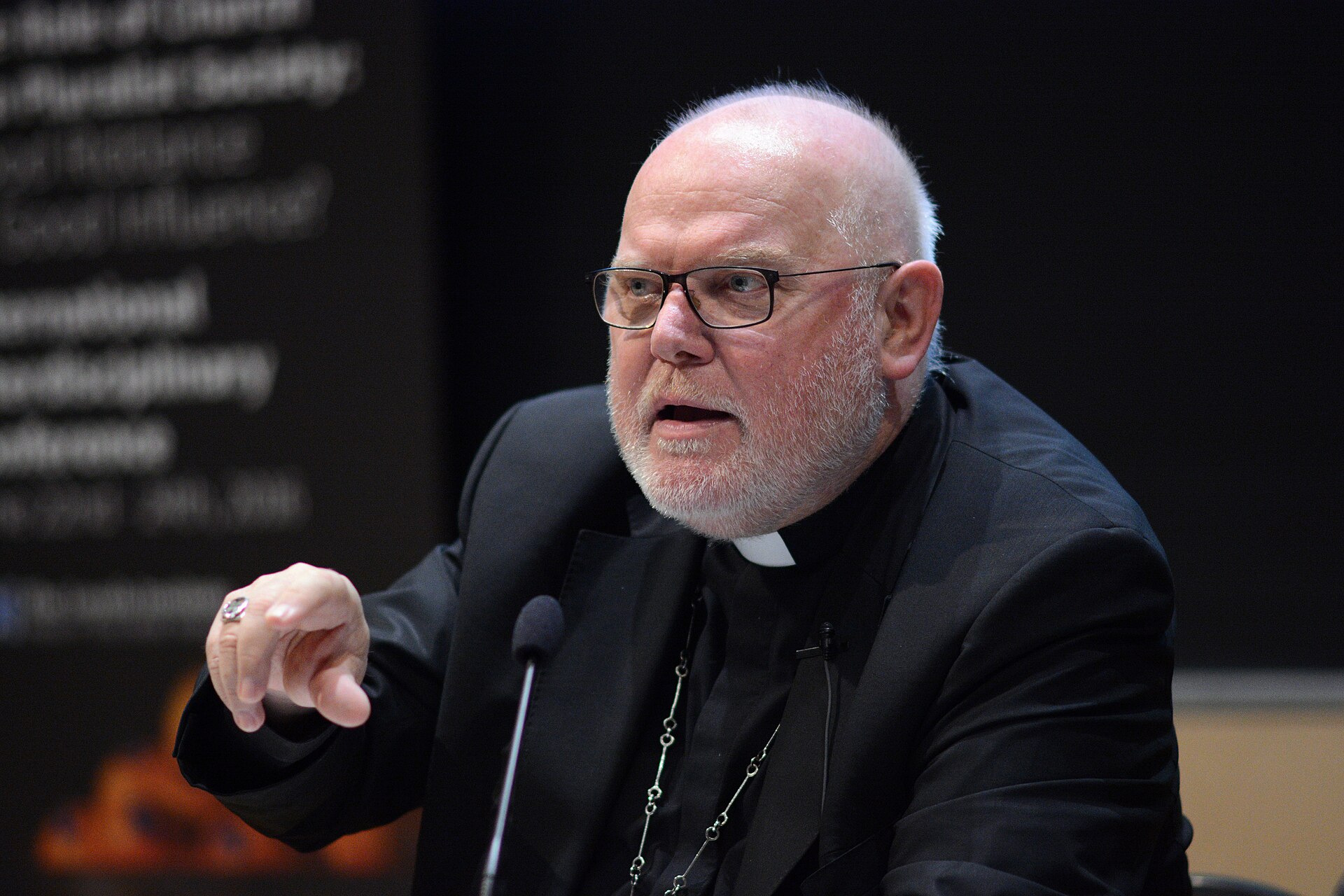
Cardinal Reinhard Marx has instructed priests in Munich to offer blessings to couples in irregular unions, including same-sex couples and those who are divorced and civilly remarried.
According to guidance confirmed this week by the Archdiocese of Munich and Freising, all pastoral practice is to follow the guidelines Segen gibt der Liebe Kraft (“Blessing Gives Love Strength”), adopted last year by the Joint Conference of the German Bishops’ Conference and the Central Committee of German Catholics (ZdK), and now set to become a fundamental element of pastoral work across the archdiocese. The guidelines are now to serve as a basis for pastoral work throughout the archdiocese.
In a letter to clergy and pastoral staff, Cardinal Marx wrote, “To all couples who love each other and seek a blessing from the Church for their partnership, I wish that they may feel God’s grace in this blessing.” The letter, confirmed by diocesan officials, sets out that “no couple should be turned away” if they request such a blessing.
The archdiocese has also announced that training sessions for pastoral workers on how to conduct these blessing ceremonies will begin in June, in line with the new guidelines. These sessions are intended to standardise the practice across parishes and ensure that clergy and lay workers are prepared to implement the policy.
Clergy who do not wish to perform such blessings themselves are not permitted simply to refuse. Instead, they are expected to refer couples to their dean or to another member of pastoral staff who is willing to carry out the ceremony. The directive is intended to ensure that access to blessings is not dependent on the personal views of individual priests.
Cardinal Marx also addressed anticipated resistance, asking that the “theological meaning” of the blessings be explained to those who “still struggle with this blessing”. The guidance emphasises that the practice is to be understood within a broader pastoral framework rather than as a change to sacramental teaching.
The document makes clear that such blessings are not equivalent to marriage. However, it adds that this distinction should not result in exclusion. “This does not mean that the blessing of a non-sacramental union, which in many cases is already a civil marriage, pushes the couple to the margins of the community and the Church,” the text states.
It continues, “Couples should be welcomed in the heart of the community. Therefore, the Church asks God to bless and grant good things to these couples.” The guidelines also suggest that, “where necessary”, such blessings may serve as “a contribution to healing and reconciliation”.
The blessing text was developed and processed under the Poope Leo XIV Predecessor Pope Francis’s declaration Fiducia Supplicans in December 2023, which permitted non-liturgical blessings of couples in irregular situations under certain conditions.
According to the document, the guidelines are intended as an offer to “divorced and remarried individuals, couples of all gender identities and sexual orientations, as well as couples who, for other reasons, do not wish or cannot receive the sacrament of marriage”. At the time of their presentation, they were described as following “the pastoral approach of the pontificate of Pope Francis”.
However, several dioceses, including Augsburg, Eichstätt, Cologne, Passau and Regensburg, have indicated that they do not use the guidelines.
Blessings for same-sex couples are already a common practice in several German dioceses, and the Munich directive will set the broader trend within the country’s Church structures. The introduction of formal guidelines indicates a move towards greater consistency in how such blessings are carried out.